Finding a manufacturer in China for a wholesale order is a sequence of decisions rather than a directory search. Buyers need to define the product, compare capable suppliers on the same commercial basis, confirm that samples and production match the approved requirements, and agree how goods will be packed and handed over. A documented process makes gaps visible before they become expensive changes.
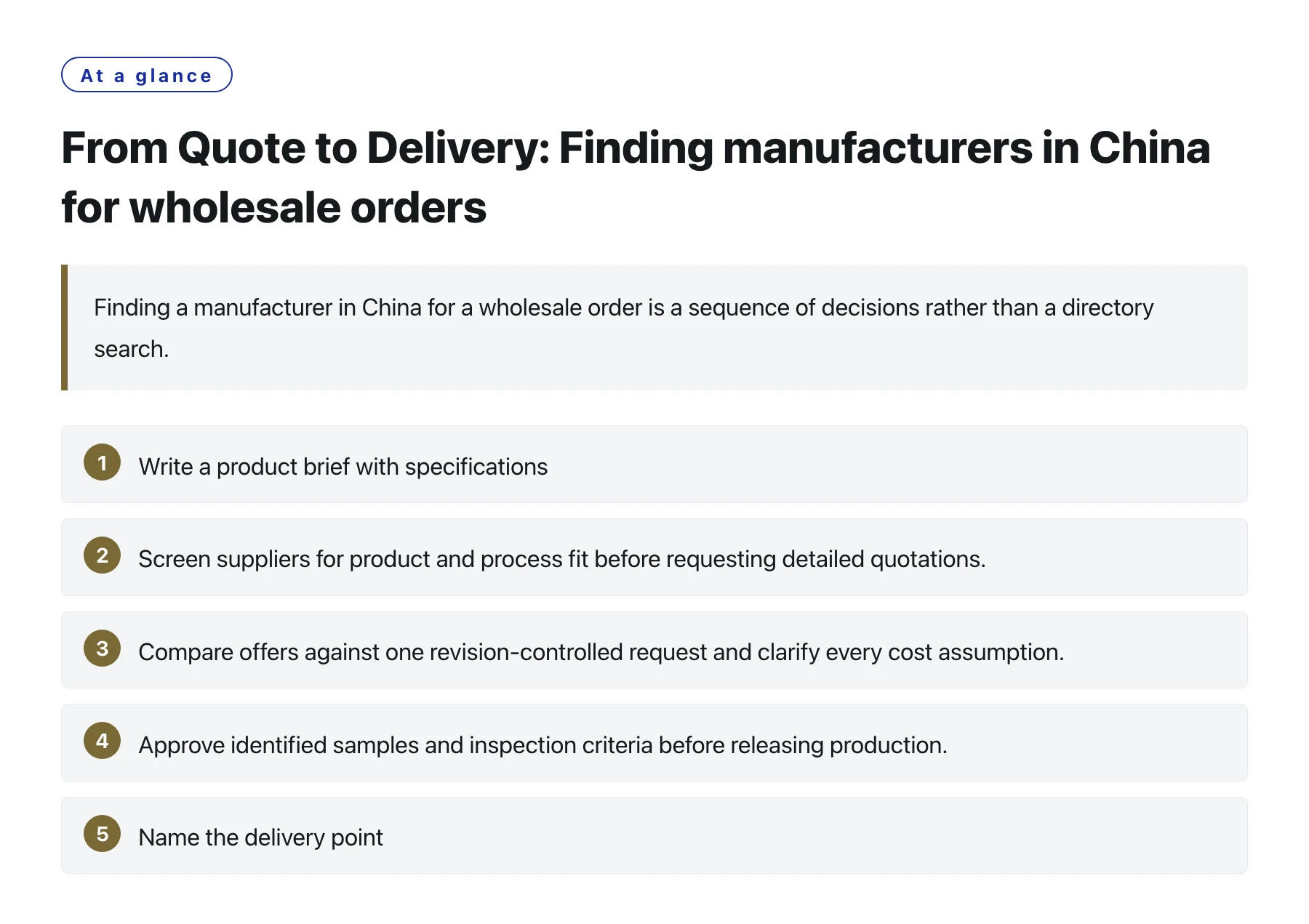
Key takeawaysWrite a product brief with specifications, compliance needs, quantities, and forecast assumptions. · Screen suppliers for product and process fit before requesting detailed quotations. · Compare offers against one revision-controlled request and clarify every cost assumption. · Approve identified samples and inspection criteria before releasing production. · Name the delivery point, transport responsibilities, documents, and change approvers in writing.
A wholesale purchase can involve tooling, packaging, minimum quantities, several production stages, and international transport. A low unit price is useful only when the offer covers the product and handoffs the buyer actually needs.
Start with a brief suppliers can quote consistently
Describe the item in terms that can be checked: intended use, dimensions, materials, construction, finish, performance, variants, packaging, labeling, and required accessories. Attach drawings, reference images, or a bill of materials where they add precision. Mark each requirement as mandatory, preferred, or open for discussion. This prevents a supplier from treating an illustrative picture as a complete specification.
State the order quantity by product variant and explain whether it is a first order, repeat order, or forecast. Ask suppliers to identify minimum quantities, tooling or setup charges, sample lead time, production lead time, and the point from which each estimate is measured. Keep confirmed requirements separate from forecast assumptions; an annual estimate should not silently become a binding commitment.
Identify regulatory and market requirements early. The buyer should determine which standards, testing, marks, language, or certificates apply in the destination market and ask suppliers what evidence they can provide. Product category and destination matter, so avoid assuming that a generic factory certificate proves that a specific model is compliant. Assign an owner to verify requirements with the relevant regulator or qualified testing provider.
Screen for fit before comparing prices
Build a shortlist around product experience, process capability, equipment, materials, quality controls, and willingness to communicate against a written brief. A supplier that makes a similar product may still lack a required process, finish, tolerance, or packaging capability. Ask how the proposed factory would manufacture the item and which stages, if any, would be subcontracted. Buyers who need help building and qualifying a shortlist can review sourcing manufacturers in China as one possible service resource.
Check that the responding legal entity, factory location, and proposed production site are clear. Request relevant business and product information, then verify important details through appropriate records, references, independent inspection, or a site visit where justified. Treat a trading company and a factory as different operating models: either may suit the order, but the buyer should understand who contracts, produces, inspects, and handles changes.
Use a consistent screening record. For each candidate, note what evidence was reviewed, when it was obtained, which questions remain open, and who will resolve them. Do not turn a sales presentation into a capability conclusion. If a supplier will not answer a material question, record the uncertainty and decide whether it is acceptable before paying for tooling or samples.
Make quotations comparable
Send the same request revision to every shortlisted supplier and ask each to quote by variant, quantity, currency, and validity period. Separate unit price from tooling, sample, packaging, labeling, testing, inspection, and other charges. Request assumptions for material grade, components, process, yield, and included services. If an item is excluded or provisional, require it to be listed rather than hidden inside a general note.
Compare lead times by milestone: sample preparation, approval, material procurement, production, inspection, packing, and ready date. Ask what starts each clock and what events can change it. A quoted production period may exclude the time needed for design questions, sample approval, or a buyer's response. Record dependencies and identify the person who must act at each milestone.
Clarify delivery terms with the named place and the applicable Incoterms® rule, edition, and point. The selected rule allocates defined delivery, cost, risk, and formalities between buyer and seller; a shorthand label without a precise place can leave operational questions unresolved. The International Chamber of Commerce explains the obligations attached to each rule, including the limited seller obligations under EXW. [1] Ask separately about inland pickup, export clearance, main carriage, insurance, destination charges, import clearance, and final delivery so the landed-cost comparison uses stated assumptions.
Validate the product before production
Request a sample that represents the proposed materials, process, components, and finish. Label it with supplier, model, revision, date, and the characteristics that were evaluated. If the first sample is for appearance only, record what it does not demonstrate, such as production consistency, packaging performance, or compliance testing. Approve changes in writing and retain a controlled reference when practical.
Translate the brief into acceptance criteria that can be observed or measured. Specify dimensions and tolerances, visual defects, functional checks, quantity basis, sampling method, and the handling of nonconforming results. Choose checks according to product risk and order context. Inspection can provide evidence about the inspected sample or lot; it is not a blanket guarantee about future production.
Before releasing bulk production, confirm the final specification, approved sample, bill of materials, artwork, packaging, quantity, delivery point, and any required test plan. Make the approval record traceable to a dated revision. If the supplier proposes a material substitution or process change, pause the affected approval and assess its effect on performance, appearance, cost, lead time, and regulatory evidence.
Manage production, packing, and shipment as connected stages
Agree how progress will be reported and what evidence is useful at each stage. Depending on the order, that can include material confirmation, first-piece review, in-process checks, finished-goods inspection, carton details, or loading records. Set dates and owners rather than relying on a general promise to provide updates. Escalate a missed milestone while there is still time to choose a practical response.
Review packaging against product protection, storage, handling, labeling, and transport needs. Confirm carton dimensions, weights, marks, inner protection, palletization, and any destination-specific labeling before packing begins. The final packing list should match the goods and package count. The U.S. Department of Commerce describes export packing lists as detailed shipment records and notes that they are not a substitute for the commercial invoice. [2] Import documentation and customs requirements vary by destination, so the importer should confirm the required forms and data with its broker or relevant authority.
Before dispatch, reconcile the approved order, actual quantities, inspection disposition, commercial invoice, packing list, transport booking, and named handoff point. Keep copies of the final versions and note who has custody of the goods at each transition. If a discrepancy appears, identify whether it affects product acceptance, customs clearance, payment, or delivery and route it to the responsible party before the shipment moves.
Keep decisions and changes traceable
Maintain one order file that links the supplier quote, purchase order, approved specification, sample record, inspection evidence, packing details, and shipment documents. Use stable identifiers and revision dates so a team member can tell which document governed a decision. This is particularly useful when several product variants or production sites are involved.
Use a change request for any alteration to material, design, process, quantity, packaging, price, delivery date, or destination. The request should state the reason, affected documents, cost and timing effect, evidence needed, and authorized approver. Do not treat a message acknowledging receipt as approval. Update the controlled specification and purchase record after the decision, then notify every party who relies on the old revision.
After delivery, compare actual outcomes with the original assumptions: defects, shortages, transit damage, document discrepancies, and schedule variance. Record corrective actions and update supplier qualification information when the evidence supports doing so. A repeat order is an opportunity to improve the brief and checkpoints, but past performance should be described precisely rather than generalized beyond the products, site, and period observed.
Sources
Frequently asked questions
How many manufacturers should I compare?
There is no universal number. Screen enough candidates to understand available capability and commercial alternatives, then prioritize suppliers that can provide evidence against the same brief.
Should I choose the supplier with the lowest quote?
Compare the same specification, quantity, delivery point, included costs, lead-time assumptions, and evidence. A lower price may reflect a different scope or unresolved exclusions.
Does an approved sample guarantee bulk production will match?
No. It records an agreed reference for defined characteristics. Use production controls, traceable revisions, and appropriate inspection to check whether later goods conform.
What should I confirm before goods ship?
Reconcile approved quantities and inspection status with packaging, invoice, packing list, transport booking, delivery term, named handoff point, and destination documentation needs.