Gift a Song AI turns personal facts into a playable three- to four-minute present. A brief can include 6 to 10 memories, 2 names, 1 private phrase, a preferred genre, and a confirmed pronunciation guide. The system can shape that material into verses, a repeated chorus, and a bridge while reducing the time and cost associated with writing, composing, singing, and mixing services. Research published in 2013 with 62 participants found that familiar popular music frequently evoked autobiographical memories. A personalized track builds on that response by joining recognizable details with melody, repetition, and a recording the recipient can replay.
Most personalized products add a name or date to an item designed for thousands of buyers. A song can be built around one person from the first line to the last note. Its lyrics may mention a first meeting in 2019, a missed flight, a dog named Milo, and Sunday breakfasts at 10:30 a.m. Those facts give the listener several points of recognition, which leads to the role of memory in the finished track.
Music and autobiographical memory have a documented relationship. In a 2013 study, Krumhansl and Zupnick played popular songs from different periods to 62 university students. Songs from participants’ younger years, along with music heard through their parents, brought back personal memories and emotional responses. A custom song narrows the material further by using events from one relationship rather than relying only on familiar commercial music.
A name identifies the recipient; a verified scene shows why the song belongs to that person.
That distinction affects the quality of the brief. “You are kind and funny” could describe millions of people. “You brought coffee to Platform 4 every Monday during the winter of 2021” supplies a place, routine, season, year, and caring behavior. One sentence carries more usable information than several broad compliments, so gathering facts should come before choosing rhymes.
A practical request form can collect 15 to 25 details, then reduce them to the 6 to 10 that fit the recording:
- Recipient’s full name and preferred nickname
- Correct pronunciation supplied by a 10-second voice note
- Relationship, occasion, and delivery date
- Three shared events with locations and approximate years
- Two ordinary routines that show the relationship
- One phrase, joke, or saying used between the two people
- Favorite genre, singer type, and approximate mood
- Subjects that should remain private
- One message for the final chorus
Selection matters because a three-minute song usually holds about 300 to 450 sung words, depending on tempo and pauses. Listing 20 memories can reduce each one to a passing reference. Using 7 well-described moments leaves room for the listener to recognize a place, understand what happened, and hear why the giver remembers it, which then shapes the song’s structure.
| Section | Typical duration | Suitable information |
|---|---|---|
| Opening verse | 30–40 seconds | First meeting, home, or early memory |
| First chorus | 20–30 seconds | Main message in repeatable language |
| Second verse | 30–40 seconds | Shared routine, change, or difficulty |
| Bridge | 20–30 seconds | Present-day perspective |
| Final chorus | 30–45 seconds | Familiar words with 1 revised line |
A familiar structure helps the recipient follow the story on the first listen. The opening verse can establish where the relationship began. The second verse can show how it developed. The bridge can move from a 2018 memory to the present, while the final chorus changes one line to mention a home, engagement, child, or future plan. That progression also guides the musical style.
Tempo affects how the same facts are received. A reflective track often sits near 65 to 80 beats per minute, conversational acoustic pop may work around 85 to 105 BPM, and a playful celebration may suit 110 to 125 BPM. The ranges are starting points rather than rules; the recipient’s taste and the emotional weight of the story should determine the recording.
Instrumentation adds another layer of personalization. Piano and a close vocal can suit a private anniversary message. Acoustic guitar, bass, and light drums may fit road-trip memories. Soul-influenced keyboards can support a warm family song, while strings may suit a wedding or memorial. The arrangement should leave enough space for names, dates, and locations to remain understandable, leading to the importance of vocal delivery.
Pronunciation errors can interrupt recognition within seconds. Andrea, Louis, Helena, and Mia may be spoken differently across families, languages, and regions. A short audio sample is more reliable than written phonetics. The same check should cover surnames, towns, restaurants, and pet names, especially when stress falls on an unexpected syllable.
Personal accuracy matters more than elaborate production.
Chronology deserves the same care. If a couple met in 2017 but visited Paris in 2019, the song should not place both events in the opening summer. Dates can be checked against photographs, messages, tickets, calendars, or relatives. An approximate phrase such as “two summers later” is better than an incorrect year, and accurate timing supports the emotional sequence.
Sensory information can make each scene easier to picture. Instead of “our first apartment,” a lyric can mention the blue kitchen wall, the broken heater, and takeaway pizza eaten on the floor in January 2020. Instead of “we loved road trips,” it can name the old Volvo, a rainy motorway, and the song played repeatedly between Boston and Portland.
A useful edit assigns one sensory cue to each major memory:
- A visible object, color, or item of clothing
- A sound, song, repeated sentence, or household noise
- A food, drink, scent, or weather condition
- A physical movement, such as dancing, cycling, or running
- A location confirmed by the recipient’s own story
Five cues are enough to give the lyric texture without crowding it. They also help an AI system avoid generic language because the request contains material that cannot easily be substituted for another customer’s story. That level of specificity is especially useful when the present is romantic.
A best gift ideas for boyfriend might include the place where he met the giver, his preferred nickname, the first meal they cooked, a 2022 holiday that went wrong, and the phrase he uses before every journey. The lyric should not pretend the giver witnessed childhood events learned later. “You told me about summers at your grandfather’s cabin” keeps the point of view honest and still shows careful listening.
Other relationships require different material. A parent’s song may mention 6:15 a.m. school runs, packed lunches, weekend repairs, and repeated advice. A sibling’s version can use shared bedrooms, board-game arguments, and family holidays. A retirement song can include 25 years of workplace routines, colleagues, and milestones without relying on exaggerated praise.
The best detail is often ordinary: one cereal bowl, one bus stop, one sentence said every night.
Ordinary routines show sustained familiarity. Major events such as weddings and graduations already have photographs and official dates. Fewer records exist for Friday phone calls, grocery-store jokes, or the way someone checked the doors before bed. Including 2 or 3 routine memories gives the song material that a standard celebration card rarely preserves, which raises a privacy question.
Not every true detail belongs in a recording. Illness, divorce, financial stress, infertility, adoption, bereavement, and family disagreement may require permission. A private story might be acceptable for headphones but uncomfortable when played before 80 wedding guests. The giver should label each memory as private, family-only, or suitable for an audience before production begins.
Humor requires similar restraint. An embarrassing story may be affectionate between two people and awkward in a public room. A safer approach mentions the shared result rather than exposing someone: “We missed the train and laughed until midnight” keeps the memory without assigning blame. After privacy is settled, presentation can extend the life of the song.
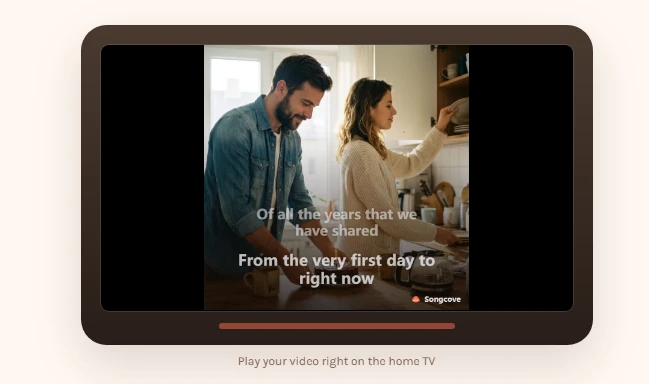
A three-minute lyric video usually works with 15 to 24 photographs, giving each image about 8 to 12 seconds on screen. Images should follow the order of the lyrics: the first apartment appears during the first-apartment line, not 40 seconds later. Rapid edits can compete with detailed words, while slower changes allow the listener to connect the picture with the sung memory.
Presentation options can include:
- A private listening link delivered at a meaningful time
- A printed lyric sheet with the occasion date
- A QR code placed inside a card or photo book
- A wedding slideshow shown before dinner
- A birthday video combining short clips and photographs
- A memorial recording shared only with close relatives
- An instrumental file for later family videos
File preservation should be planned as carefully as the presentation. Keep one lossless WAV file, one high-quality MP3, the approved lyrics, and the artwork in at least 2 locations. A local copy and a reputable cloud service reduce the chance of loss when a phone is replaced. File names should include the recipient, occasion, and year so the recording remains identifiable in 2035.
Revision should begin with facts rather than taste. The giver can check whether every name is correct, each year follows the real sequence, and every private reference has permission. The next review can examine whether the chorus is understandable after one listen and whether any general line could be replaced by a real place, object, or routine.
A final listening test should use headphones, a phone speaker, and a small Bluetooth speaker. Names may sound clear on studio headphones but disappear beneath instruments on a phone. Vocals should remain easy to understand at moderate volume, with limited reverb on information-heavy lines and no background harmony covering the recipient’s name.
The finished song can then move between settings without changing its personal record. It may first play at a 30th birthday, later appear in a wedding video, and return during a 10th anniversary. The melody stays familiar while photographs, relationships, and circumstances continue to grow around the same names, dates, and shared language.