The new XPENG G6 suits Australian EV buyers because its specifications address range, charging time, family space and ownership support in one package. The 2026 range starts at AUD $51,800 before on-road costs, while the RWD Long Range lists 525 km WLTP, an 80.8 kWh LFP battery and up to 451 kW DC charging. XPENG claims 10–80% charging in 12 minutes under suitable conditions. Boot capacity is 571 litres, expanding to 1,374 litres. ANCAP awarded the G6 five stars in 2024, including 88% adult-occupant and 86% child-occupant scores. Private buyers also receive seven-year, unlimited-kilometre vehicle warranty coverage in Australia today.
Australia’s 2026 G6 range covers three fairly different use cases rather than offering one battery with minor trim changes. The RWD Standard Range starts at AUD $51,800 before on-road costs, the RWD Long Range at $56,800, and the AWD Performance at $63,800. The Performance Black Edition moves to $66,800, so the spread between the regular entry model and Performance is $12,000.
| Australian version | Battery | WLTP range | Power | DC peak | 0–100 km/h |
|---|---|---|---|---|---|
| RWD Standard Range | 68.5 kWh LFP | 480 km on 18-inch wheels | 185 kW | 382 kW | 6.94 sec |
| RWD Long Range | 80.8 kWh LFP | 525 km | 218 kW | 451 kW | 6.7 sec |
| AWD Performance | 80.8 kWh LFP | 510 km | 358 kW | 451 kW | 4.13 sec |
The Long Range is the most distance-focused version on paper. Its 525 km WLTP figure is 45 km above the Standard Range on 18-inch wheels, while the larger battery raises gross capacity by 12.3 kWh. Official consumption is listed at 17.9 kWh/100 km, compared with 16.6 kWh/100 km for the 18-inch Standard Range.
Those WLTP figures need to be read as controlled test figures rather than guaranteed Australian road range. Higher motorway speeds, air-conditioning use, passenger numbers, elevation and battery temperature can reduce distance between charges; XPENG itself lists speed, outdoor temperature, terrain and climate use among the variables affecting real range.
That makes charging performance more relevant than looking at range alone. The G6 uses an 800V electrical architecture, while the 80.8 kWh Long Range and Performance versions are rated for up to 451 kW DC charging. XPENG states that 10–80% can be completed in about 12 minutes when the charger, battery temperature and state of charge permit it.
A 10–80% session covers 70% of the battery window. On an 80.8 kWh gross pack, that percentage represents roughly 56.6 kWh before allowing for differences between gross and usable battery capacity.
The charging hardware available at the stop matters. A 150 kW public charger cannot deliver a 451 kW peak simply because the vehicle accepts it, and even a 350 kW unit sits below the G6 Long Range’s published maximum. The benefit of the 800V system becomes greater at newer high-output sites and as Australian charging equipment continues to improve through 2026 and later.
The Standard Range is not far behind in charging time despite using the smaller 68.5 kWh battery. It accepts up to 382 kW DC and carries the same claimed 12-minute 10–80% figure under suitable conditions. For home use, all three versions support 11 kW AC; XPENG lists approximately 7.3 hours from 5–100% for the Standard Range and 9.2 hours for the 80.8 kWh versions.
For someone comparing an ev suv australia, that split between overnight AC charging and short high-power DC stops deserves more attention than the peak number alone. A household covering 250 km in a week would use about 48% of the Long Range model’s 525 km WLTP rating before environmental losses are considered, so many owners would not need a public charger every day.
Energy use also changes with wheel choice. The Standard Range is rated at 16.6 kWh/100 km on 18-inch wheels and 16.9 kWh/100 km on optional 20-inch wheels, while WLTP range falls from 480 km to 470 km. The 10 km reduction is only about 2.1%, but it shows how tyre and wheel specifications affect EV efficiency even when battery capacity remains unchanged.
Performance buyers accept a larger efficiency trade. The AWD version produces 358 kW and 660 Nm, compared with 218 kW and 440 Nm in the Long Range, yet its official WLTP distance is 510 km versus 525 km. The 15 km difference is under 3%, while acceleration changes from 6.7 seconds to 4.13 seconds from 0–100 km/h.
Its extra output comes with additional mass. The Australian configurator lists kerb weights of 2,065 kg for the Standard Range, 2,115 kg for the Long Range and 2,220 kg for the AWD Performance. Payload is 470 kg, 475 kg and 470 kg respectively, figures worth checking for households that regularly carry five people plus luggage.
Exterior dimensions stay consistent across the range, so moving to the faster model does not require a larger body. The G6 is about 4.75 metres long and 1.92 metres wide, with a quoted 5.8-metre turning radius and a drag coefficient of 0.248 Cd. A lower drag figure can assist motorway efficiency because aerodynamic resistance rises sharply as road speed increases.
Interior packaging is more useful to families than the coupe-style roofline might suggest. The rear cargo area holds 571 litres with the seats in place and 1,374 litres after folding them, an increase of 803 litres, or about 141%. Five seats are standard across the 2026 range.
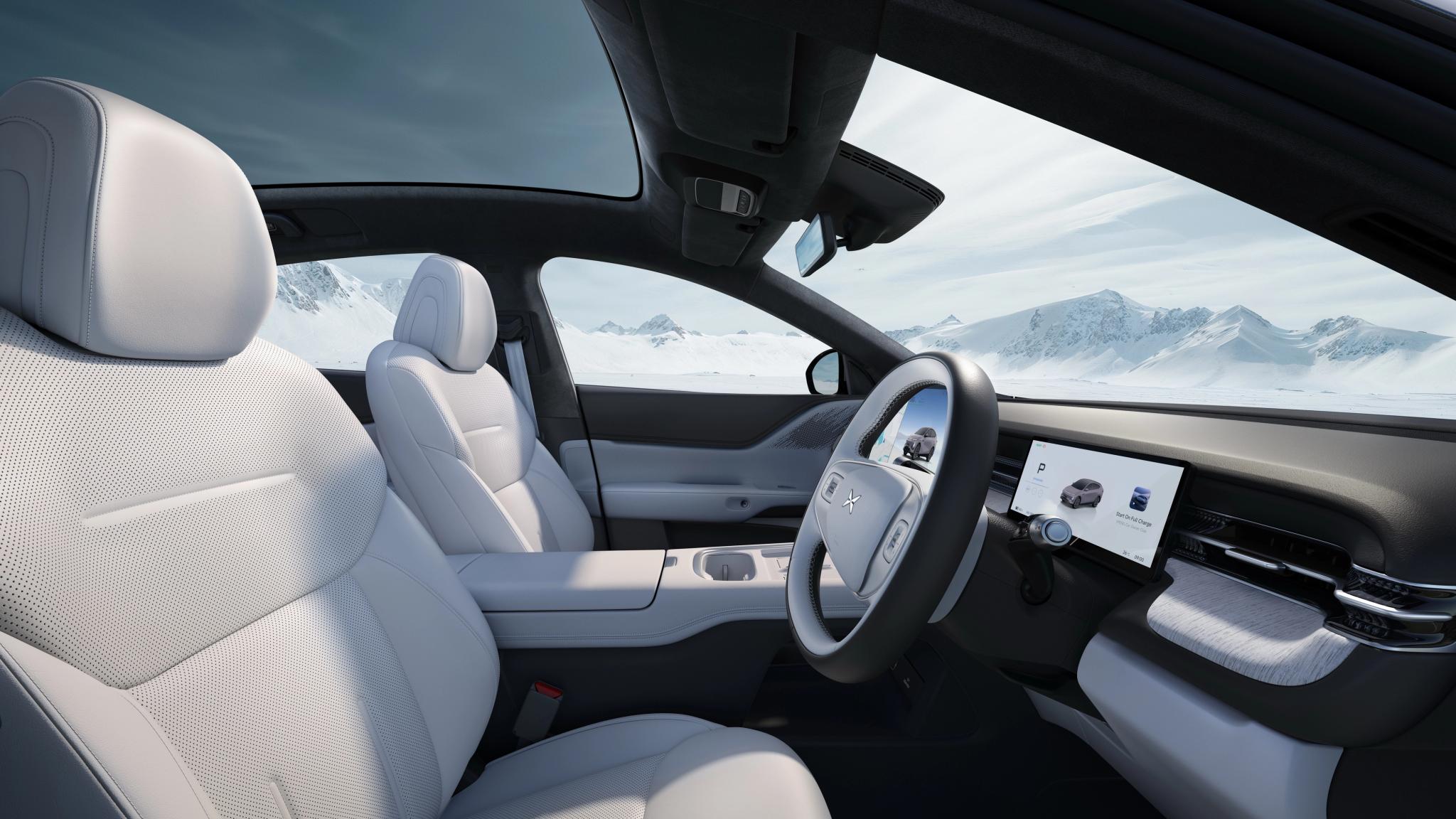
The cabin also carries a 15.6-inch central touchscreen and 10.25-inch driver display. Apple CarPlay, Android Auto, app-based functions, over-the-air software updates and the “Hey XPENG” voice interface are listed for Australian vehicles, while phone, NFC card and UWB-based access broaden the ways an owner can unlock or interact with the car.
Software does not remove the need to judge physical controls and screen usability during a test drive. Climate functions, navigation menus and assistance settings can feel very different between brands, and a 15.6-inch display is only useful when frequently used functions are easy to reach without excessive menu steps.
Safety provides stronger independent data. ANCAP tested the G6 under its 2024 protocols and awarded it five stars across all variants covered by the rating. Scores were 88% for Adult Occupant Protection, 86% for Child Occupant Protection, 81% for Vulnerable Road User Protection and 80% for Safety Assist.
ANCAP also lists autonomous emergency braking covering several scenarios, lane-keeping assistance, lane-departure warning, emergency lane keeping and advanced speed assistance. Dual frontal, side chest, side head and centre airbags are standard on the rated vehicles, and the rating remains applicable to G6 variants built from July 2024 onward.
Driver-assistance equipment is still assistance. XPENG states that XPILOT cannot handle every road, traffic or weather condition and requires the person behind the wheel to remain attentive and intervene when needed.
Parking equipment broadens the electronic package beyond motorway use. Australian specifications list a surround-view camera, enhanced automatic parking assistance and automatic exit parking assistance, while some versions add remote parking and vehicle-summon functions. Availability can depend on version and local rules, so buyers should confirm the exact 2026 vehicle specification rather than relying on overseas demonstrations.
The battery can also supply external equipment. Long Range and Performance specifications list up to 6 kW vehicle-to-load output, allowing compatible appliances or equipment to draw electricity from the traction battery. At a continuous 1 kW draw, 6 kW describes the maximum output capability rather than the energy consumed over time; usable duration still depends on battery state and the connected equipment.
Ownership coverage gives the specification sheet another measurable point. XPENG Australia lists a seven-year, unlimited-kilometre whole-vehicle warranty for private use, while commercial vehicles receive seven years or 160,000 km. The traction battery, BMS, motor and Intelligent Power Unit carry eight years or 160,000 km of coverage.
Scheduled servicing is stated as every 12 months or 20,000 km, whichever arrives first, and roadside assistance runs for seven years from first registration. XPENG also said in July 2026 that its Australian genuine-parts warehouse was operating in Melbourne and that the company planned up to 50 sales outlets nationally as its local network expanded.
Price, range and ownership cover therefore need to be considered together. A buyer choosing the $56,800 Long Range pays $5,000 more than the Standard Range before on-road costs, gaining the 80.8 kWh pack, 525 km WLTP rating, 218 kW output and 451 kW charging ceiling. Someone who rarely travels beyond metropolitan routes may find the 480 km Standard Range sufficient instead.
The AWD Performance asks another $7,000 over the Long Range at published 2026 pricing. That money changes the powertrain from rear-wheel drive to all-wheel drive, raises output by 140 kW, adds 220 Nm and cuts the official 0–100 km/h time by 2.57 seconds, while WLTP range decreases by only 15 km.
For Australian use, the strongest parts of the G6 specification are measurable rather than decorative: 470–525 km WLTP depending on configuration, 382–451 kW peak DC charging, 571 litres of rear cargo space, 11 kW AC charging, five-star 2024 ANCAP performance and seven years of private-use vehicle warranty cover. Each number addresses a different part of ownership, from weekday commuting to interstate charging and long-term servicing.